01
The challenge
Finding the right people should be easier
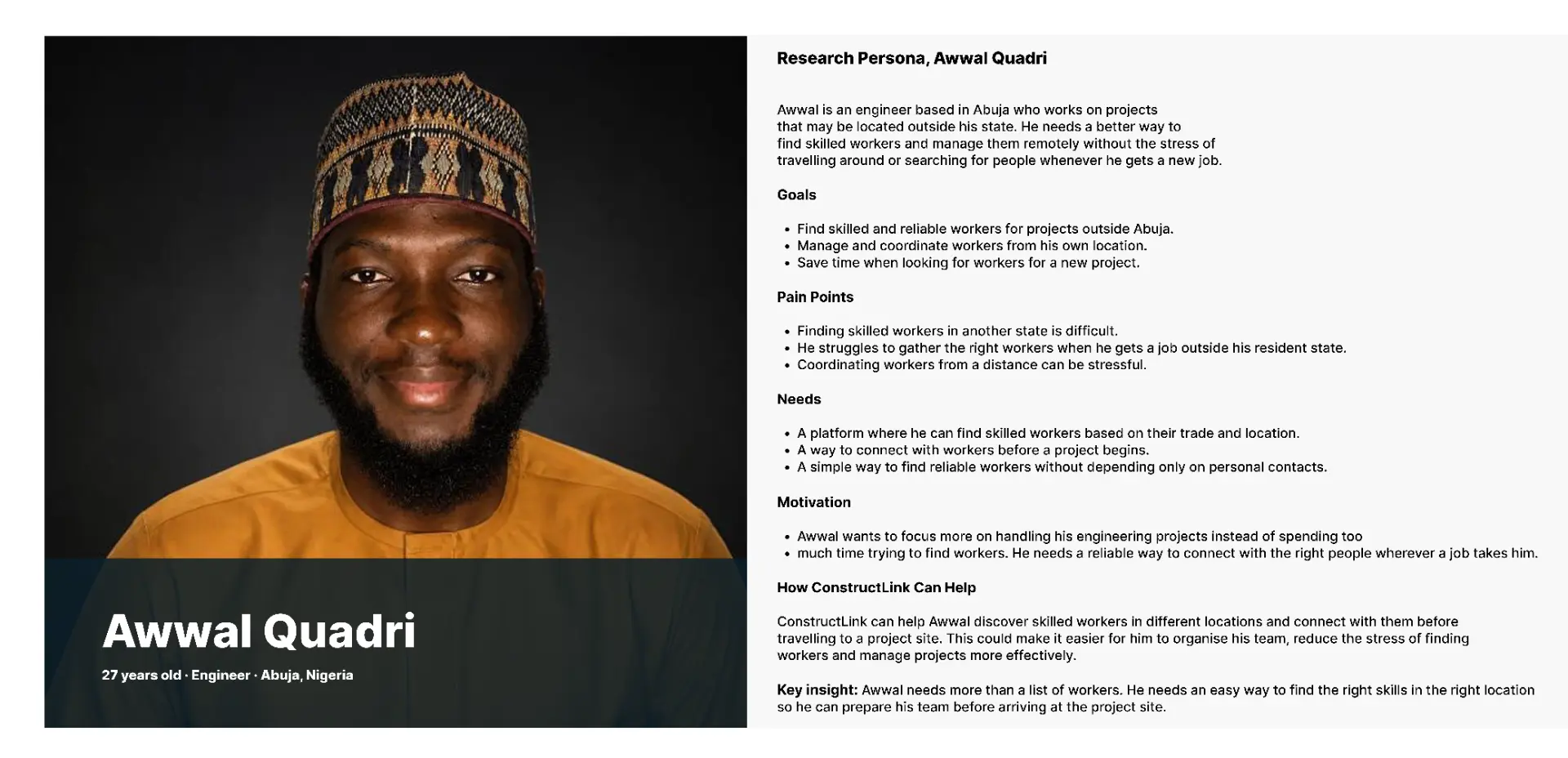
Construction projects depend on having the right people in the right place at the right time. However, finding skilled and reliable professionals can become difficult when a project is happening in another city or state.
For example, an engineer based in Abuja might secure a project in Lagos but still need to find electricians, plumbers, carpenters and other skilled workers before work can begin. Without the right contacts, the process may involve asking for referrals, searching through WhatsApp groups or relying on people they already know.
These methods can be useful but they do not always make it easy to assess someone's skills, review previous work or find the right professional for a specific location.
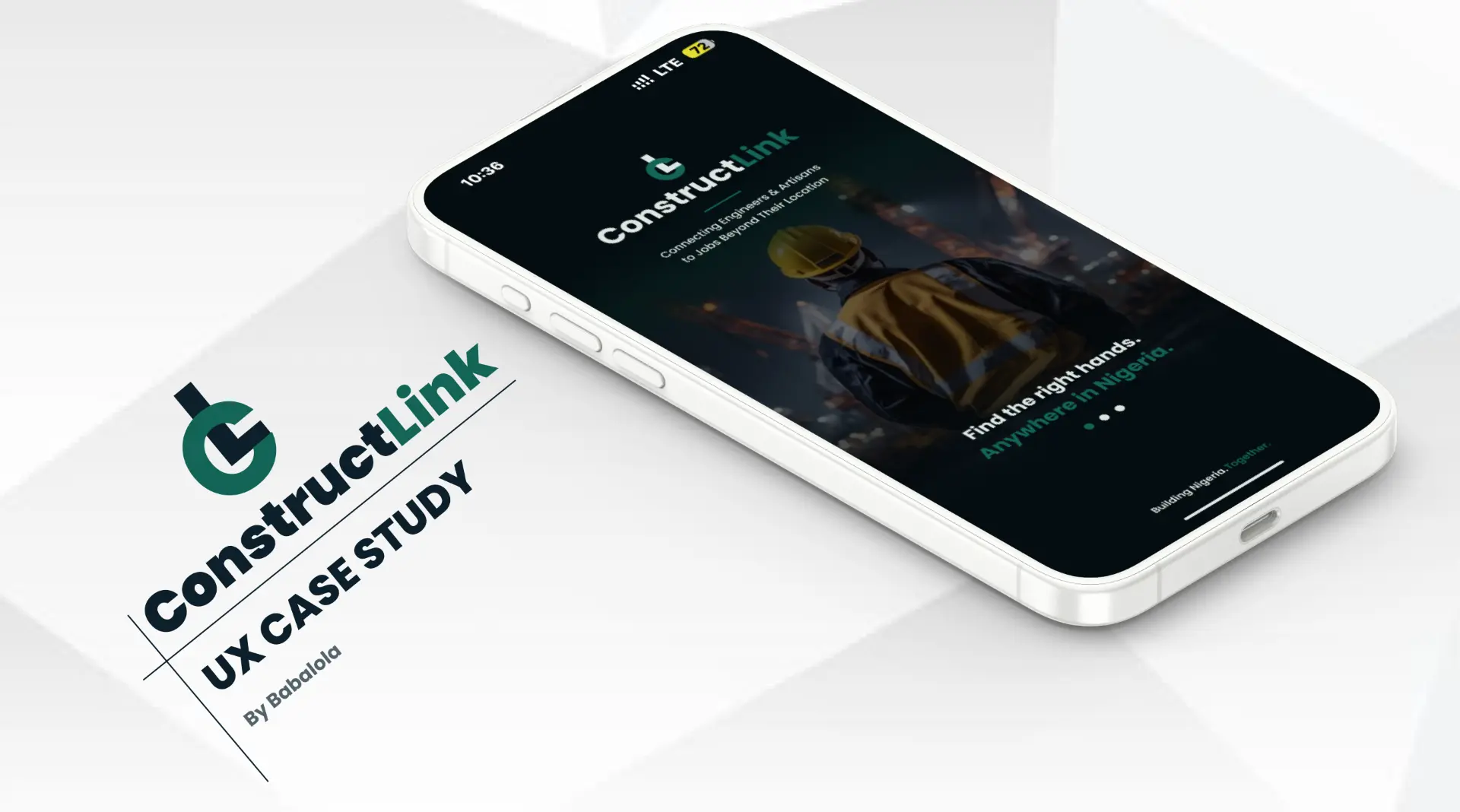
This was the problem I wanted to explore with ConstructLink.
The goal was to design a platform that could help construction professionals discover job opportunities, find skilled workers and connect with the right people for their projects.
02
My role and team collaboration
I worked alongside a product designer and three engineers based across Nigeria to develop the ConstructLink concept.
The project required us to think beyond the interface itself. We needed to consider the problem we were addressing, how users would move through the experience and how the proposed solution could be communicated clearly across design and engineering.
My contribution focused on the UI/UX design process, including research through existing information and competitor analysis, user flows, wireframes, interface design and the clickable prototype.
Working with a distributed team made clear communication important. The design needed to show how the main user journeys should work and help the team understand the purpose behind the different screens.
03
Research and discovery
Understanding the problem
Before moving into the interface, I reviewed existing information about the construction industry and analysed other platforms to understand how they handled job discovery, professional profiles, search and communication.
This helped me examine the different parts of the experience and identify areas where ConstructLink could provide value.
Three important considerations shaped my approach.
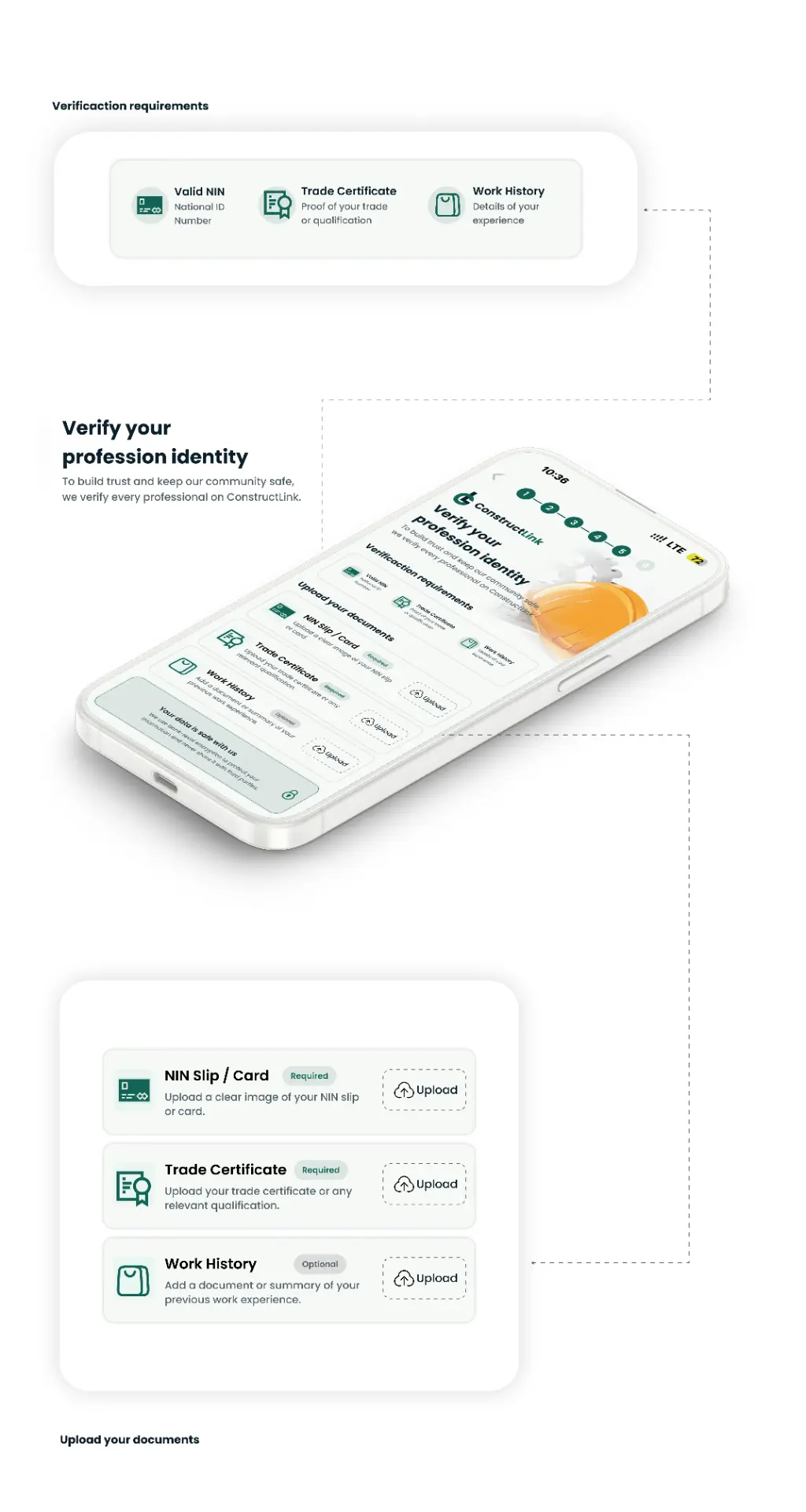
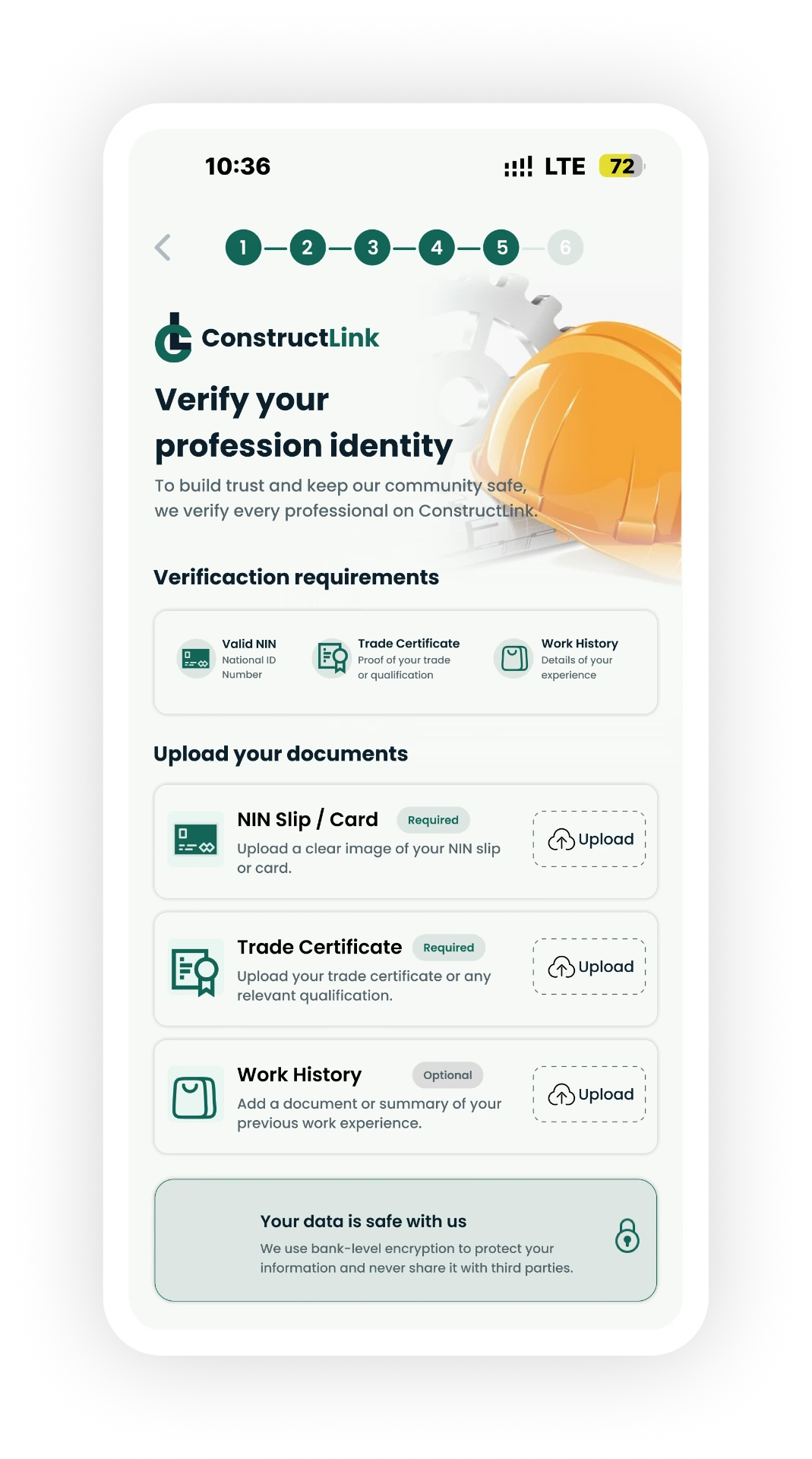
- Trust matters. Finding a professional is only one part of the process. People also need enough information to assess their skills and previous work.
- Location matters. A professional's trade is important but their location and willingness to work elsewhere can also affect whether they are suitable for a project.
- Finding opportunities should be straightforward. Users need a clear way to discover relevant jobs or professionals without navigating an unnecessarily complicated interface.
These considerations informed the direction of the design.
The research was based on existing information and competitor analysis rather than original user interviews, so the assumptions would still need to be validated with more construction professionals.
04
Defining the experience
From discovery to connection
With the problem defined, I focused on how ConstructLink could bring job discovery and professional networking into one experience.
Rather than treating it as only a job board, I explored a broader platform where construction professionals could find work, present their experience and connect with other people in the industry.
The experience centred on four priorities:
- Discover opportunities: Help professionals find construction jobs relevant to their trade and preferred location.
- Find skilled workers: Make it easier to search for professionals by trade and location.
- Assess experience: Give users a way to review professional information and examples of previous work.
- Start a conversation: Provide a direct way for users to connect and discuss potential work.
The main journeys
I then considered the main journeys for the two key user groups.
- For someone looking for work: Discover jobs, review the details, understand the requirements and proceed to apply.
- For someone looking for workers: Search by trade or location, review professional information and initiate a conversation.
Mapping these journeys helped me organise the experience before moving into the visual design. It also helped keep the focus on what users needed to do rather than simply adding more features.
05
Wireframes and design decisions
Making information easier to find
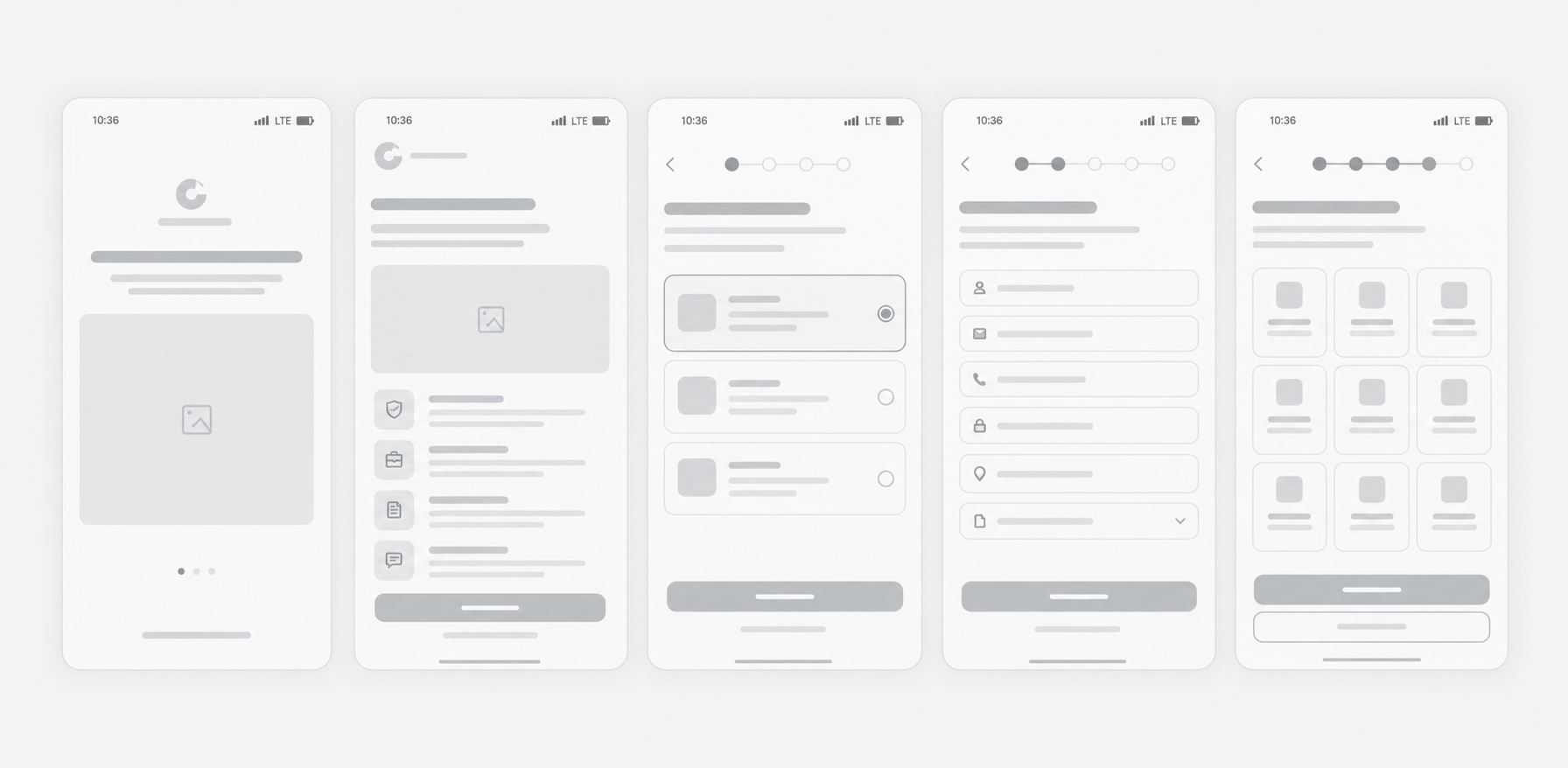
Before developing the final interface, I worked on wireframes to establish the content structure, screen hierarchy and placement of key actions.
The main design decisions focused on making the platform practical for the way construction professionals search for work and connect with others.
Making search more relevant
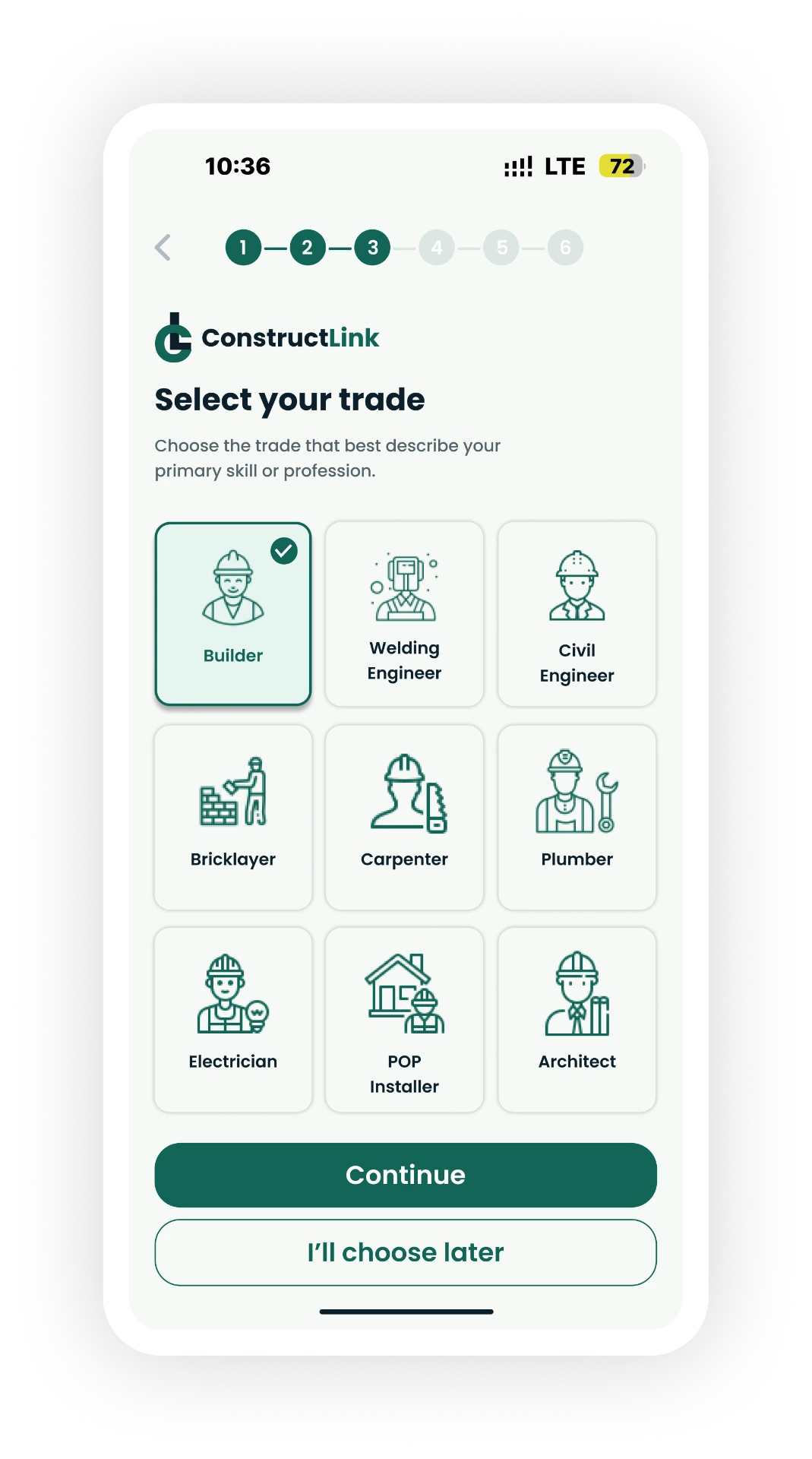
Trade and location were important considerations for professional discovery. Someone looking for an electrician in Lagos should be able to narrow their search around that need instead of sorting through unrelated results.
Giving professional profiles more value
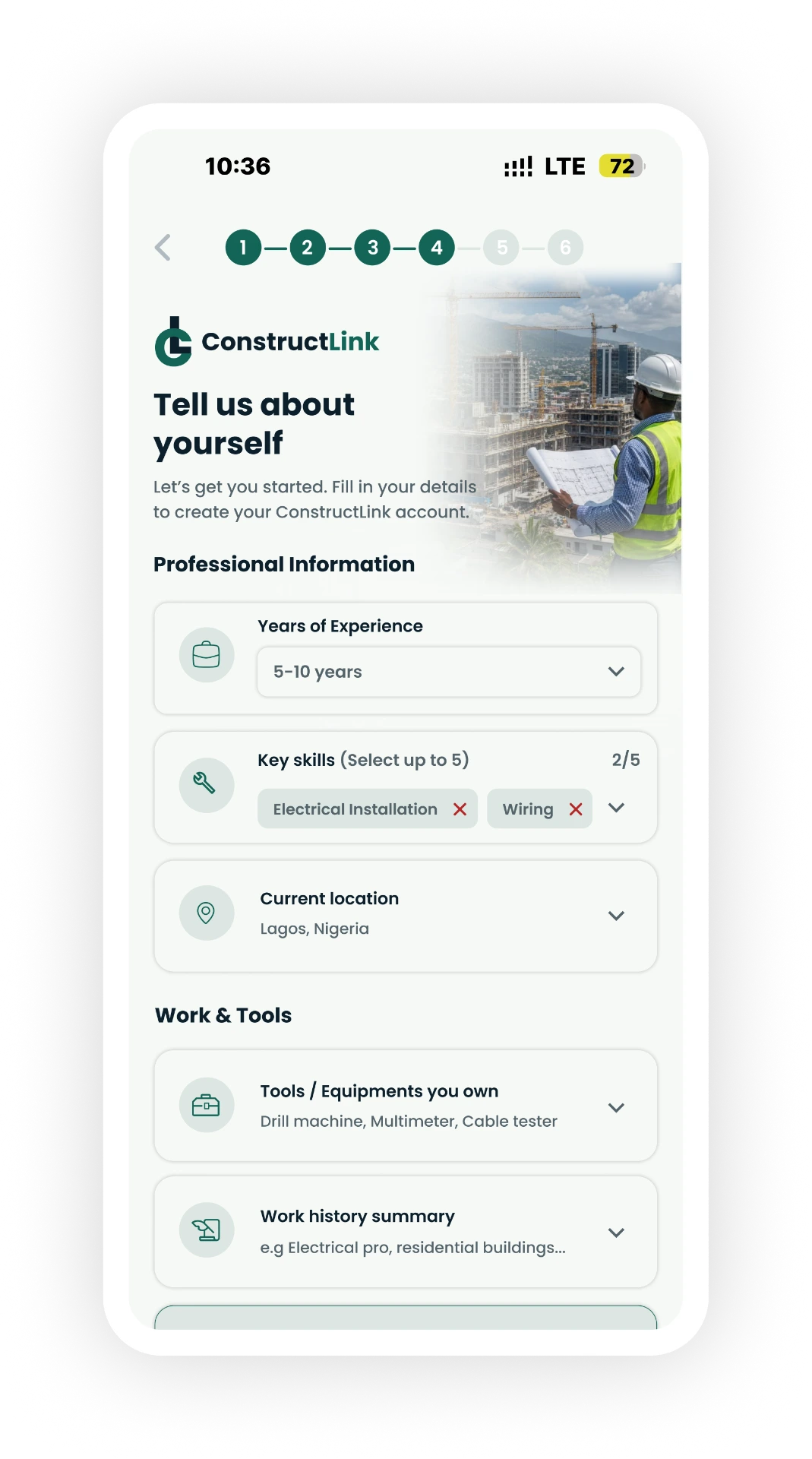
A name and job title alone may not provide enough information to assess a potential worker. I explored professional profiles that could present skills, experience and examples of previous projects in a clearer format.
Keeping job information organised
Job details need to communicate the type of work, location, requirements and other relevant information. Organising these details helps users understand an opportunity before deciding what to do next.
Making the next action clear
Whether someone is viewing a job or a professional profile, the interface should make the next relevant action easy to identify. This helps users understand how to continue without having to guess what to do.
These decisions shaped the structure of the screens and the way users could move through the proposed experience.
06
Visual design
Bringing the experience to life
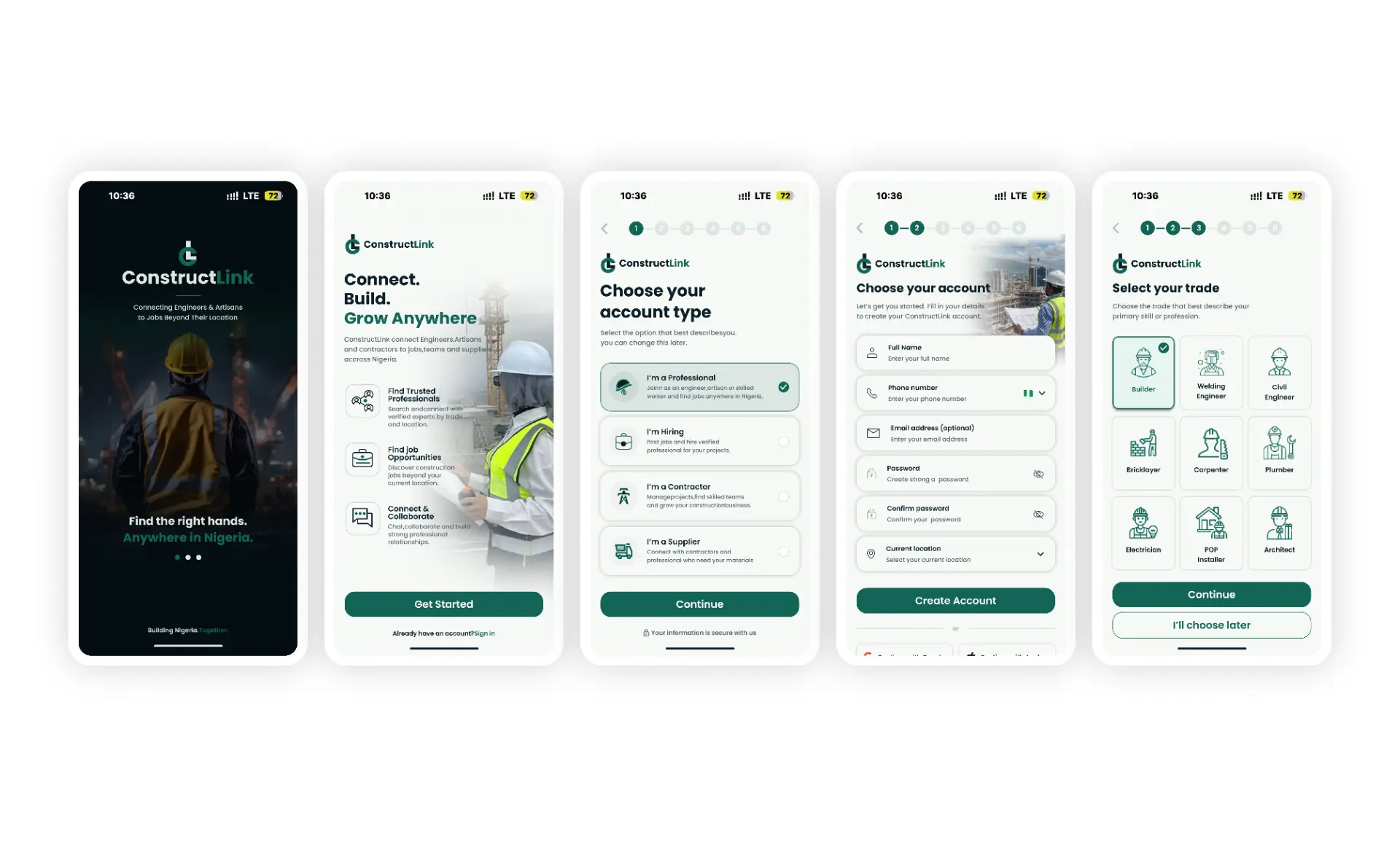
After defining the main user flows and wireframes, I moved into the UI design.
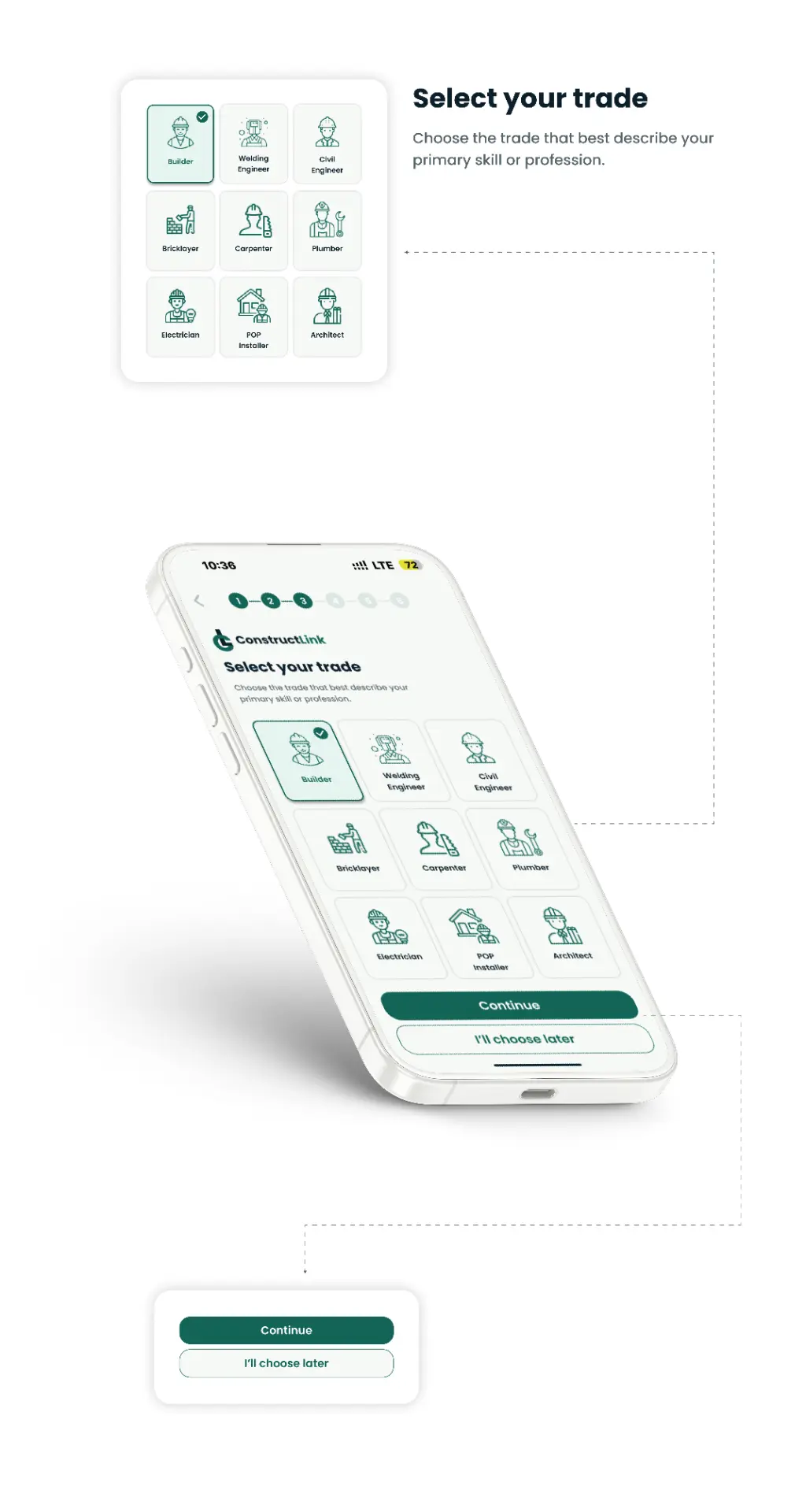
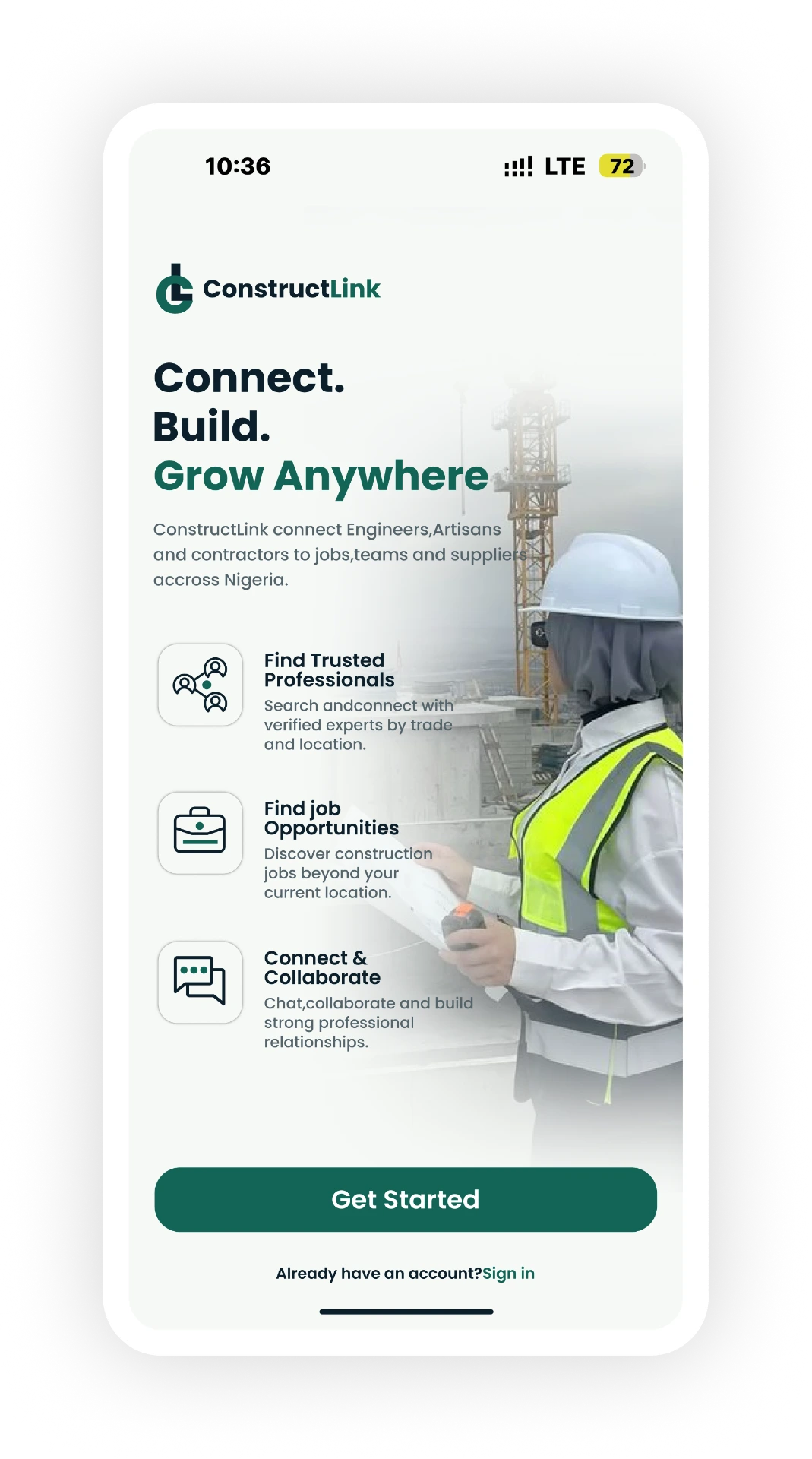
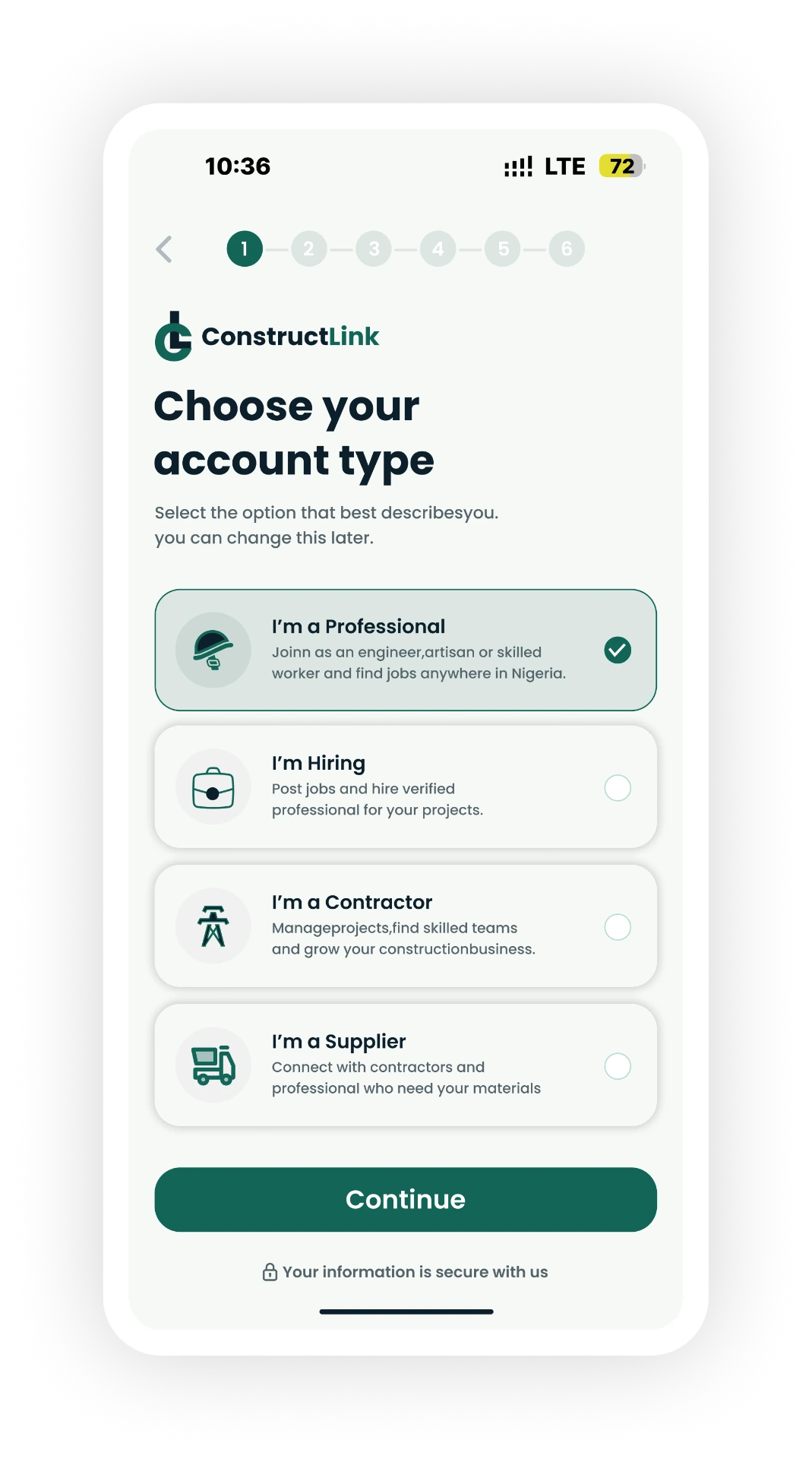
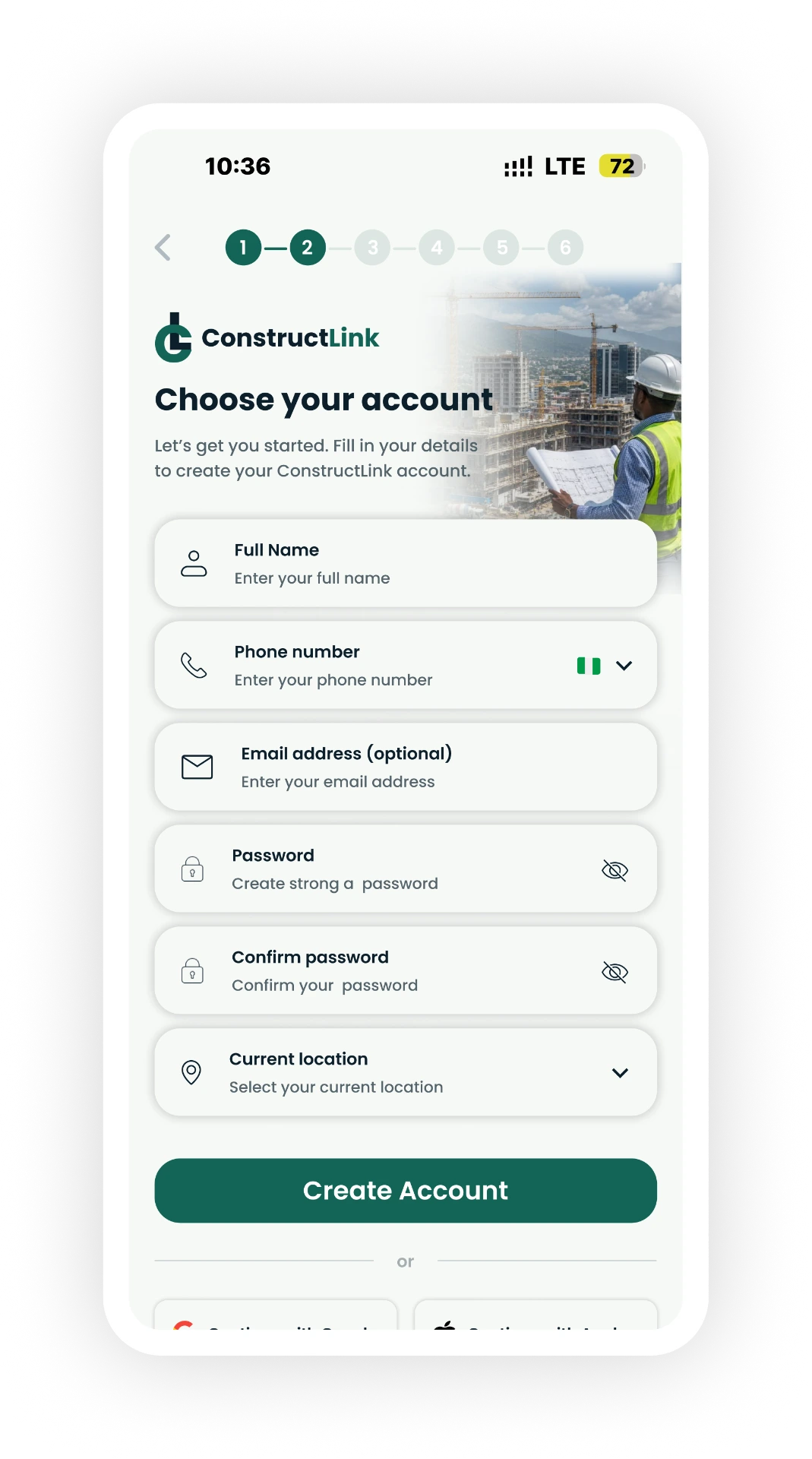
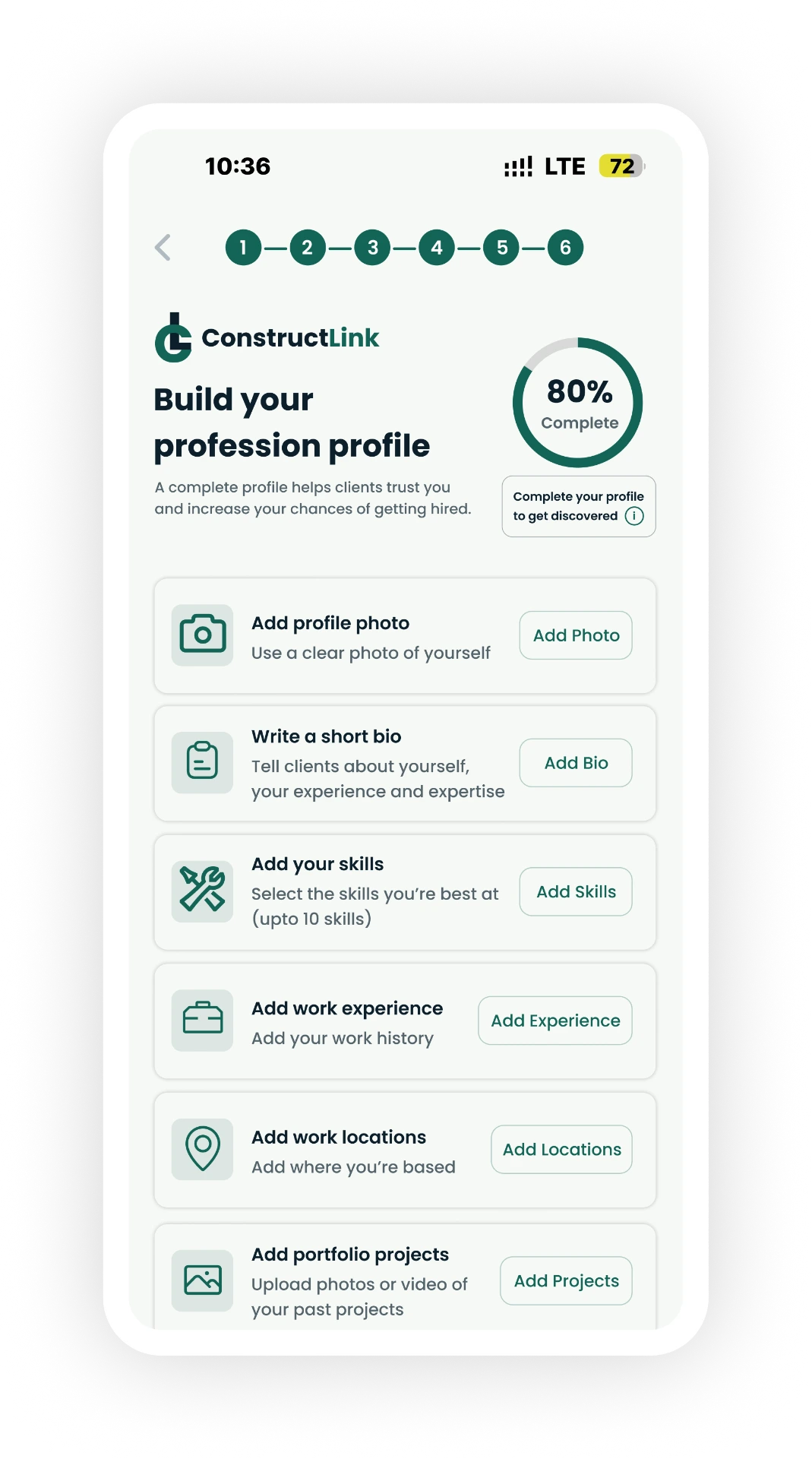
My focus was to create an interface that felt professional, clear and suitable for a construction platform. The information needed to be easy to scan, with enough visual structure to help users distinguish between jobs, professional details and actions.
I paid attention to:
- Clear information hierarchy across the screens.
- Consistent spacing and alignment.
- Readable typography and organised content.
- Reusable interface elements where appropriate.
- Clear visual emphasis on important actions.
- Consistency across related screens and user journeys.
I wanted the interface to feel practical rather than overly decorative. Since the product focuses on finding work and connecting people, useful information needed to take priority over unnecessary visual elements.
The completed UI screens brought the proposed experience into a more complete form and provided the foundation for the clickable prototype.
07
Prototype testing
Getting feedback from a contractor
After designing the prototype, I tested it with a contractor to get feedback on the proposed experience and understand how someone in the construction industry would respond to the idea.
His reaction was encouraging. After going through the prototype, he was impressed by the concept and felt it could solve many problems in the construction industry.
This feedback was important because ConstructLink was designed around challenges such as finding skilled workers, discovering job opportunities and connecting with the right people for a project.
Hearing this response gave me an encouraging indication that the problem I was exploring was relevant to someone working in the industry. It also reinforced the value of getting feedback from people who understand the challenges the product aims to address.
I treated this as an early indication of potential rather than proof that the product had solved these problems. Testing with one contractor provided an initial perspective, but further testing with more contractors and construction professionals would be needed to understand how useful the experience would be in real working conditions.
08
Outcome, lessons and next steps
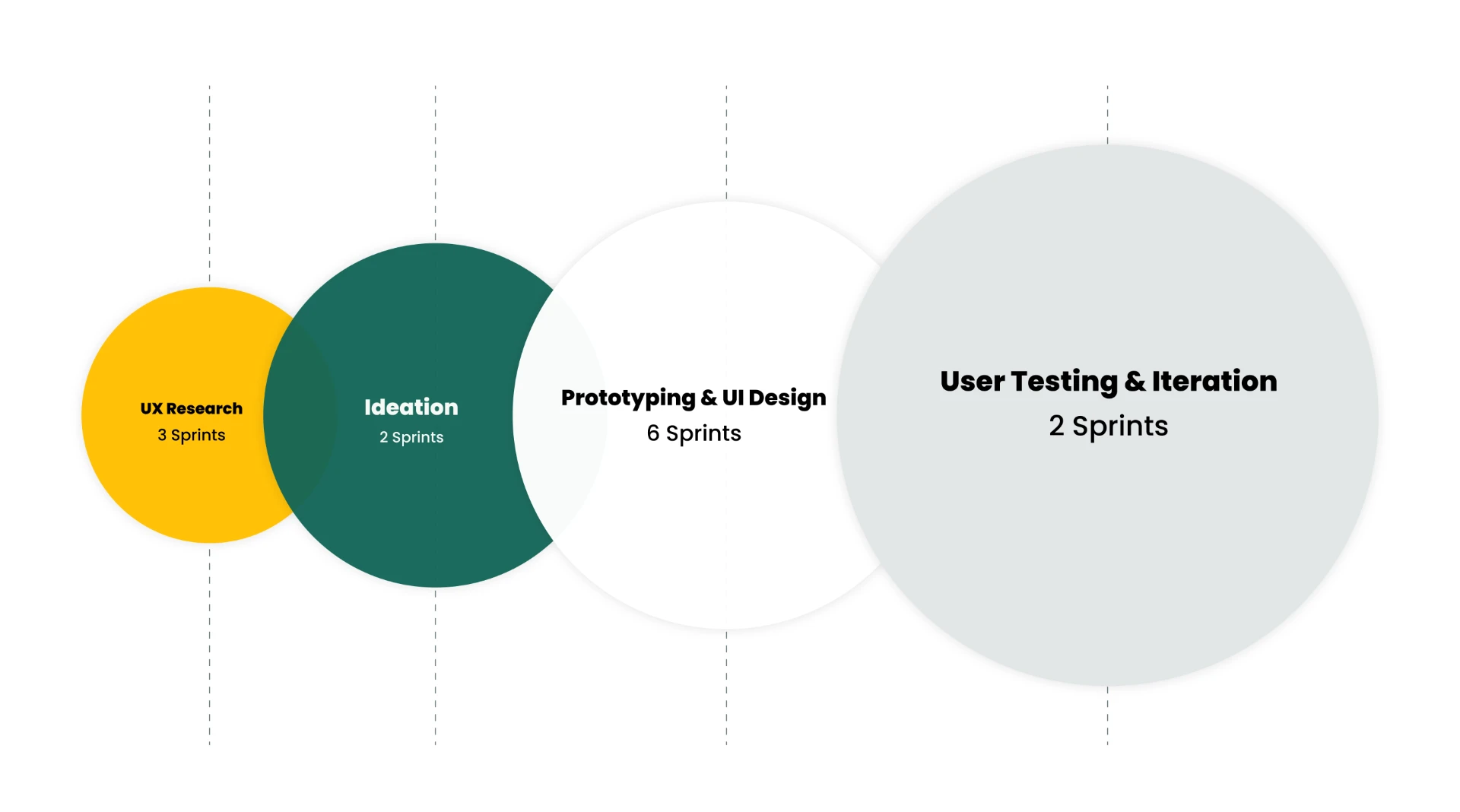
Over six weeks, I worked with the team to develop the ConstructLink concept through research and competitor analysis, user flows, wireframes, UI design and a clickable prototype.
The prototype presents the proposed approach to helping construction professionals discover jobs and find people with relevant skills. The positive feedback from the contractor was an encouraging first step in understanding how the concept might be received by someone in the industry.
The project reinforced the importance of connecting design decisions to real problems and testing ideas with people who experience those problems. A product can look good on screen, but feedback from a potential user helps reveal whether the idea makes sense beyond the design itself.
Next steps
If I were to take ConstructLink further, I would test the prototype with more contractors, skilled workers and construction professionals. I would observe how they search for jobs and workers, review professional profiles and move through the main tasks. Their feedback would help me identify confusing steps and areas that need improvement.
I would also explore measurable indicators such as how easily users find relevant professionals, how successfully they complete key tasks and how long it takes to identify suitable workers. These measures would help evaluate the product based on actual use rather than assumptions.
Features such as a supplier directory could also be explored in a later phase after the core experience had been evaluated.
My takeaway
ConstructLink gave me an opportunity to explore how product design could make it easier for construction professionals to find work and connect with the right people. Testing the prototype with a contractor and hearing his positive reaction was an encouraging step. The next stage would be to test the experience with more users and use their feedback to improve the product.