01
Project overview
Sonora is an AI music product designed to help people turn their feelings and ideas into music. The project was given to me by a freelance client who wanted to make music creation easier for people who struggle to write lyrics or turn their emotions into songs.
My responsibility was to design the product experience for both mobile and web. I worked through research, user flows, wireframes, visual design, prototyping and usability testing to shape the experience.
I collaborated with a developer and an AI engineer as part of the project. After completing the design, I handed it over to a developer for implementation.
My main focus was to create a clear and engaging interface that would make creating music with AI easier for users to understand and explore.
02
The problem
Music can help people express emotions that are sometimes difficult to explain in words. However, not everyone knows how to write lyrics, compose a song or turn an idea into something they can listen to.
During my research, I found that people struggled to turn their emotions into music. This highlighted an opportunity to design an experience that could help people move from having an idea or feeling to creating a song.
The challenge was to make the process feel approachable even for people without musical or songwriting skills.
03
Understanding the users and setting the goals
I considered people who wanted to express themselves through music, including aspiring artists, beginners and people who had ideas for songs but struggled to bring them to life.
I wanted the design to support their needs without overwhelming them with complicated tools or unnecessary steps.
I focused on three main goals:
- Make music creation easier: Help users get started without needing advanced music skills.
- Support self expression: Allow users to explore music and lyrics based on their ideas and moods.
- Keep the experience simple: Make the main features easy to find and understand.
These goals guided my decisions throughout the design process.
04
Research and design process
I interviewed aspiring artists and people who wanted to express their feelings through music. The key finding was that they found it difficult to turn their emotions into music.
This helped me focus on creating an experience that could guide users from an idea or mood towards music creation without making the process feel complicated.
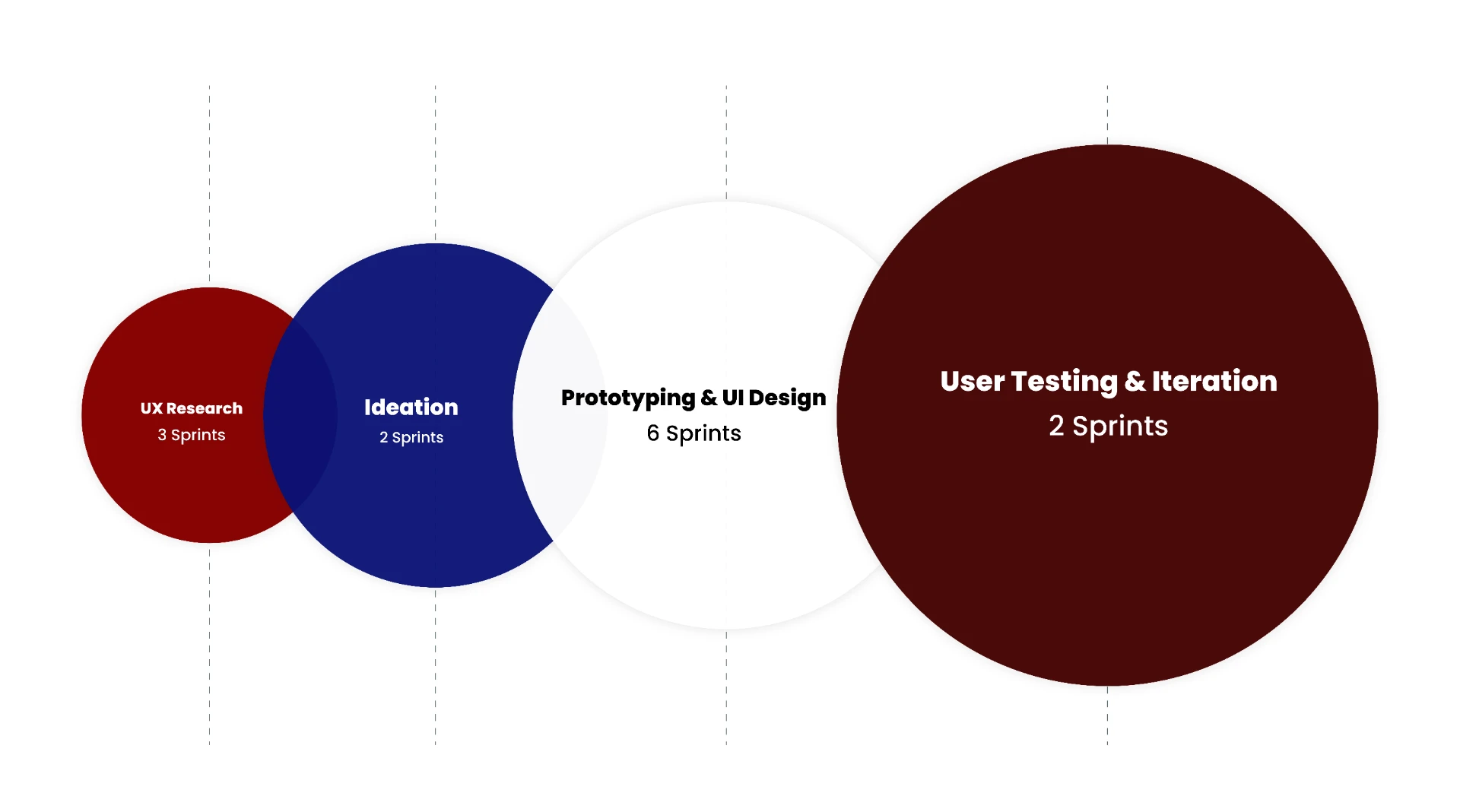
My design process included:
- Research and problem definition
- User flows
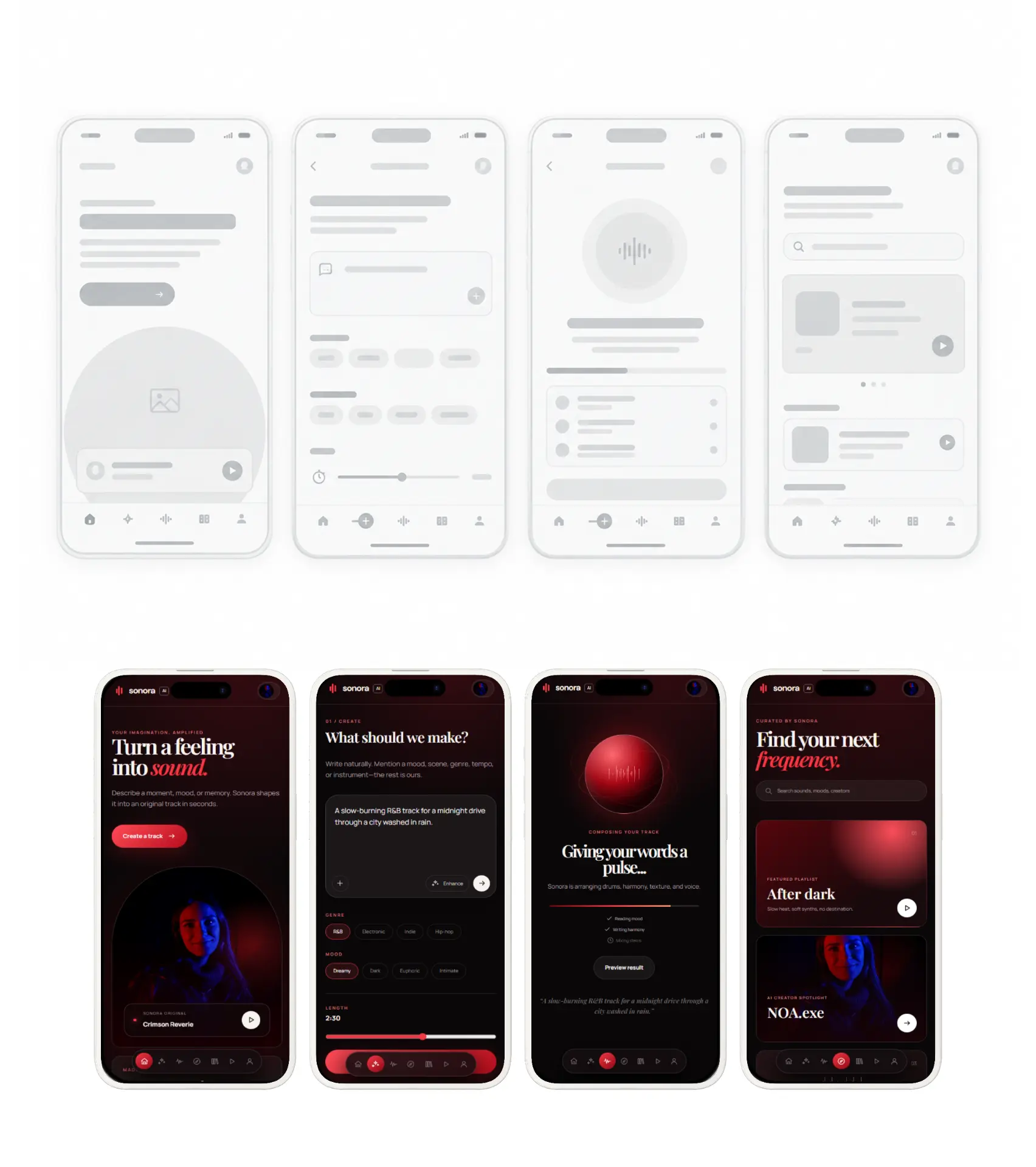
- Wireframes
- Visual design
- Interactive prototyping
- Usability testing
- Design handoff
I used this process to organise the main features and create a clear path through the product.
05
Designing the experience
I designed Sonora around the idea that users should be able to start creating music without needing to understand complicated music production tools.
The experience included several key features.
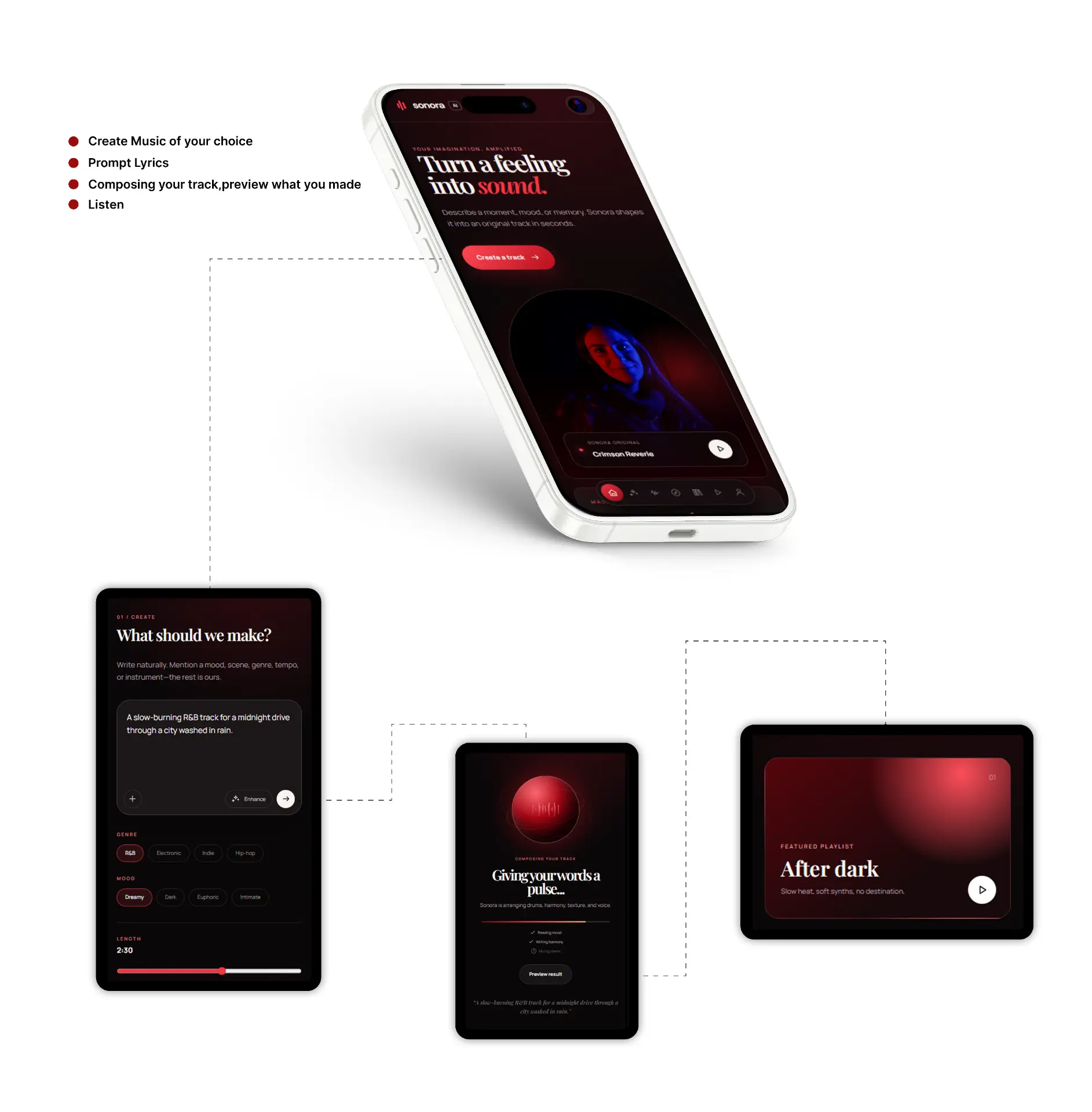
- AI music generationA space where users could describe the kind of music they wanted to create.
- AI lyrics writingA feature intended to help users develop their ideas into lyrics.
- Mood based music creationAn approach that allows users to explore music creation based on how they feel.
- DiscoverA space for exploring music and finding inspiration.
- Music libraryA place to access and manage saved songs.
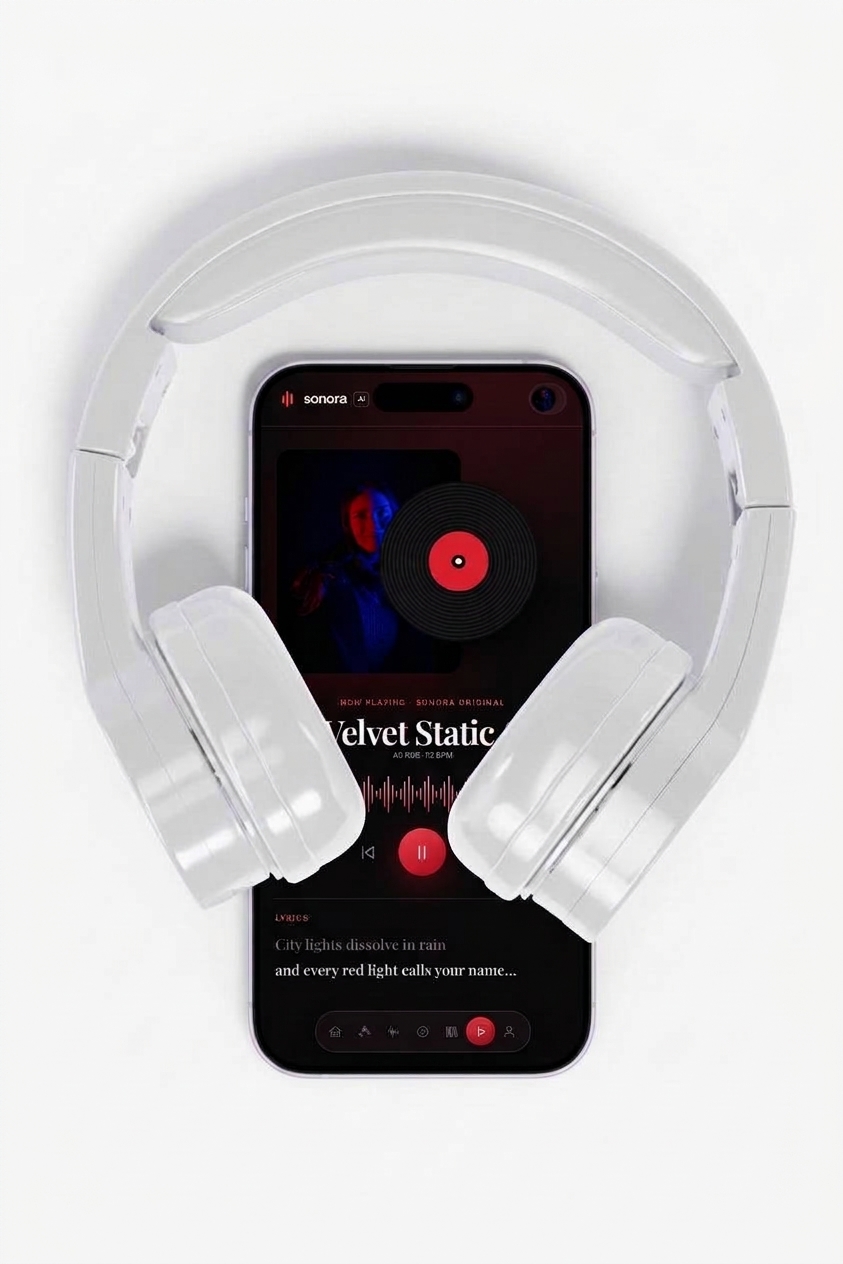
- Music playbackA listening interface for playing selected tracks.
- User profileA space for personal account information and user related content.
I organised these features to make the product easier to navigate and help users understand what they could do at each stage.
06
Visual design and key screens
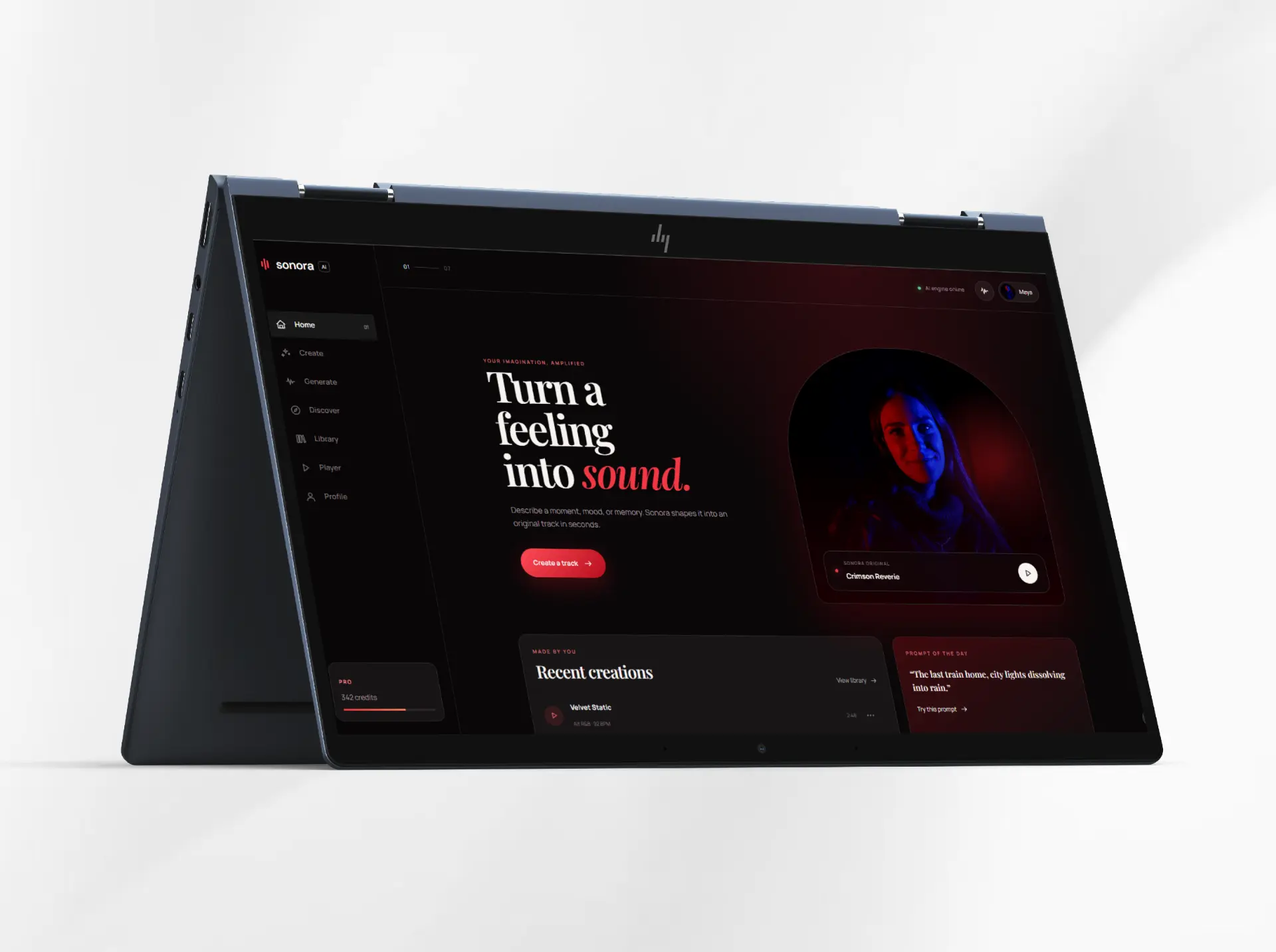
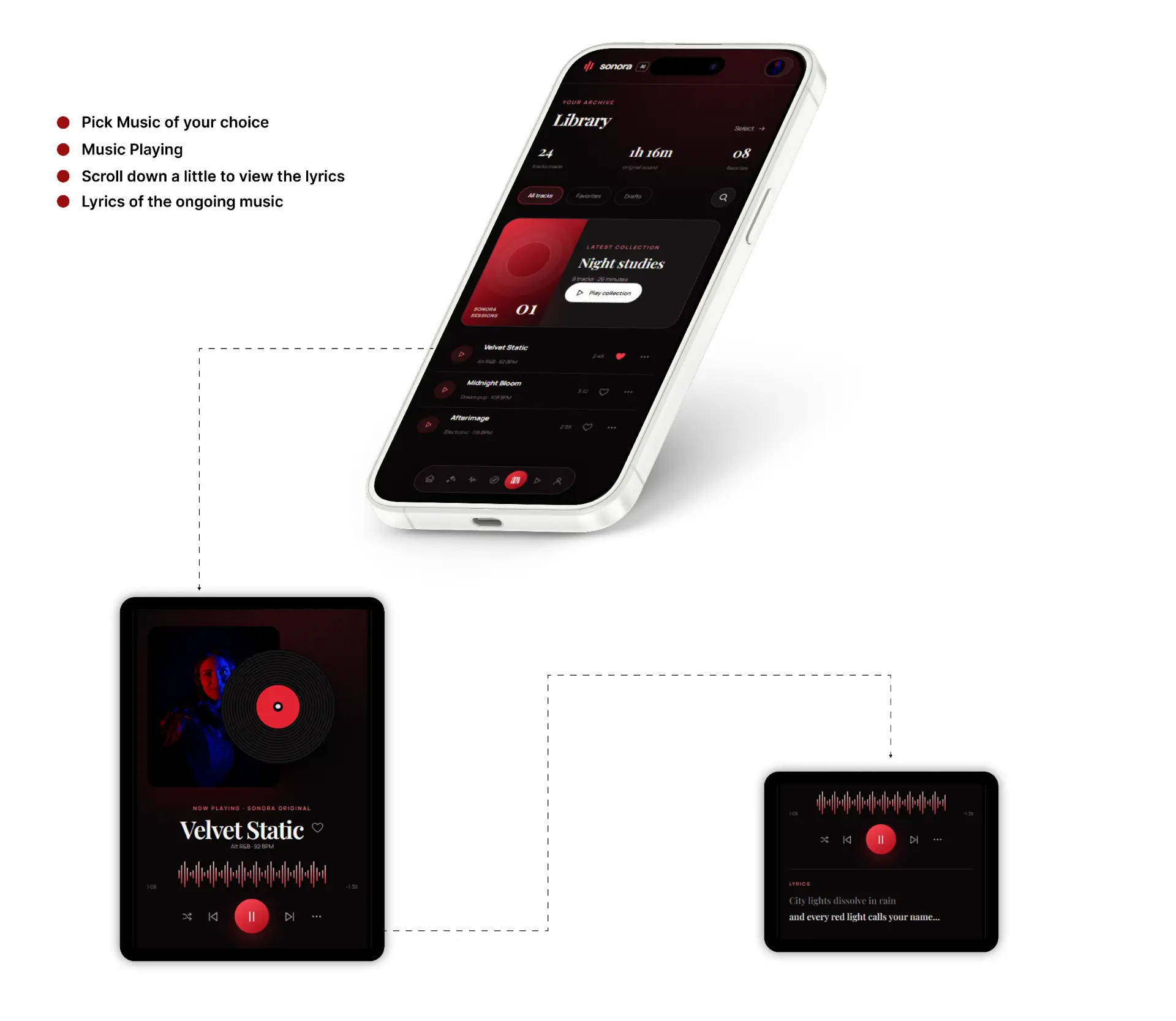
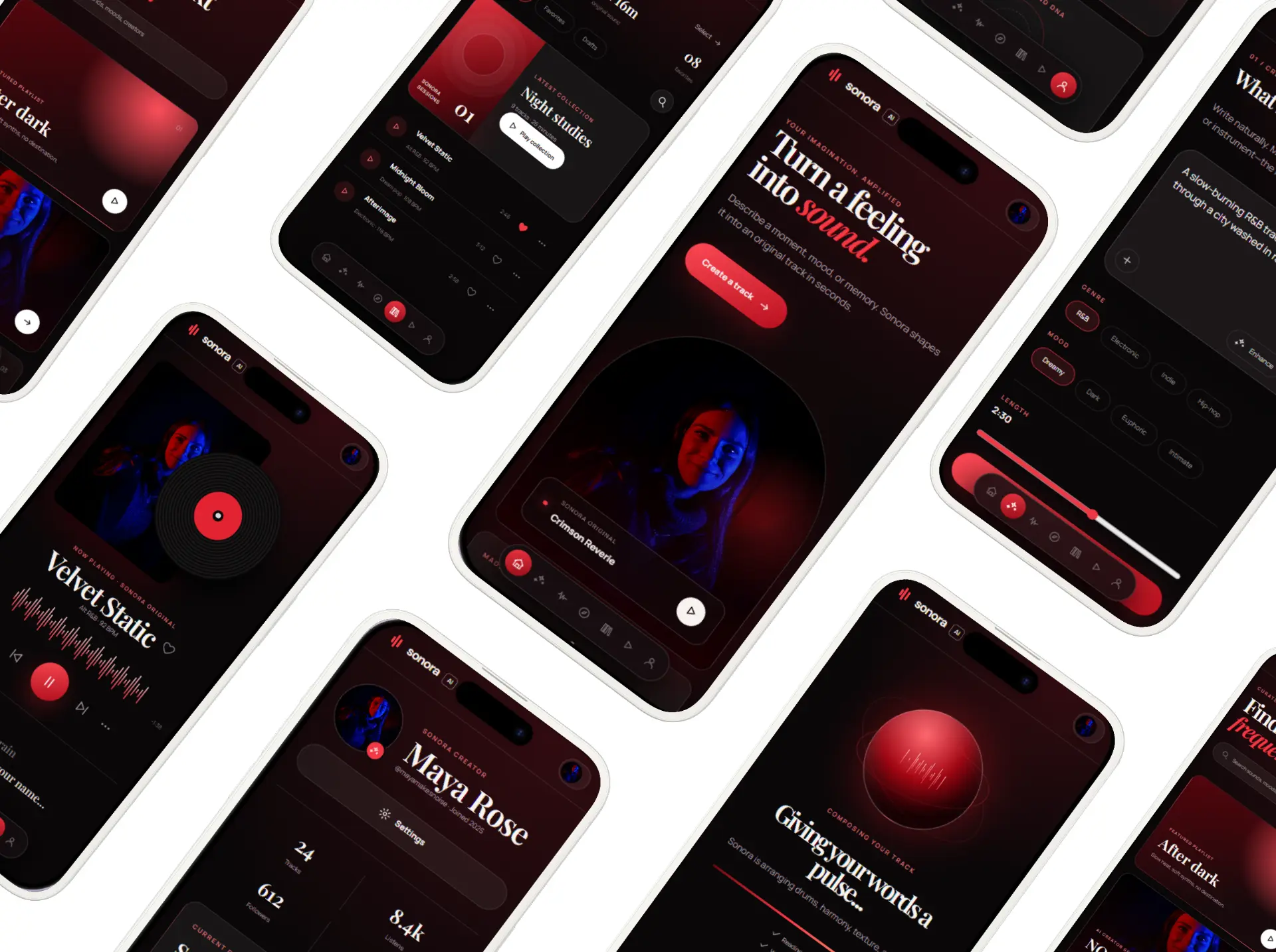
For the visual direction, I wanted Sonora to feel expressive and connected to the emotions behind music. I used a dark interface with red accents and cinematic imagery to create a distinctive visual identity.
The design needed to feel engaging without making the interface difficult to use. I paid attention to layout, typography, spacing and the presentation of the main actions so users could focus on creating and enjoying music.
The key screens included:
- Home: Introduces the product and gives users a starting point.
- Music creation: Allows users to enter their ideas and prompts.
- Generation progress: Represents the stage where a song is being created.
- Discover: Supports music exploration.
- Music library: Helps users access their saved tracks.
- Now Playing: Provides the music listening interface.
- Creator profile: Presents the user's profile and related content.
Together, these screens formed the main experience for the mobile app and website.
07
Usability testing and design handoff
After developing the design, I tested its usability with users to understand how easily they could navigate the interface and find information.
The feedback indicated that users found the design easy to understand and navigate. This supported my focus on keeping the experience clear and straightforward.
I also worked alongside a developer and an AI engineer during the project. My primary responsibility was the product's UI/UX design, while the collaboration helped bring the design and technical aspects of the project together.
Once I completed the design, I handed it over to a developer for implementation. This made the handoff an important part of my work because the design needed to communicate the intended experience clearly.
The project reached the design handoff stage. I am not presenting the AI functionality as a completed or launched product.
08
What I learned
Working on Sonora helped me think more carefully about how to design a product around something as personal as music and emotion.
One of the main challenges was turning an open ended idea into an interface that people could understand. I had to think beyond how the screens looked and consider how users would move through the experience.
The project also reinforced the importance of usability testing, clear communication and preparing designs for developer handoff.
Most importantly, it reminded me that good product design is not only about creating attractive screens. It is about helping people understand what they can do and making the experience easier to use.
Final thoughts
Sonora gave me the opportunity to work on a client project exploring how AI could support creativity through music.
From research and user flows to visual design, usability testing and developer handoff, I focused on creating an experience that felt clear, engaging and approachable.
Although the project was at the design handoff stage, it allowed me to strengthen my approach to designing AI powered products and preparing a product experience for implementation.